
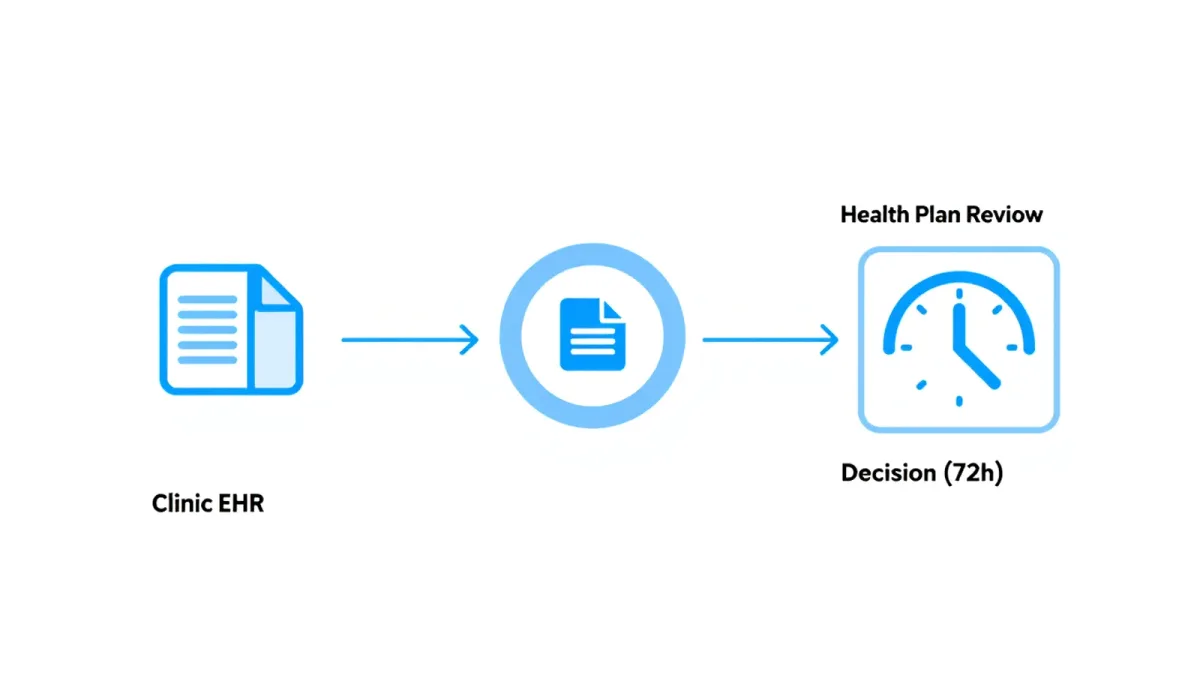
CMS announced an electronic prior authorization initiative on May 6, 2026, per the American Hospital Association's coverage of the announcement, pushing Medicare plans and providers toward a fully digital request-and-response workflow intended to cut the fax-and-phone delays that still stall care decisions weeks after the CMS-0057-F deadlines took effect.
This article publishes information, not insurance or medical advice. If a request is urgent, the 72-hour expedited pathway applies regardless of what system your plan uses.
What did CMS announce on May 6?
Per the AHA's May 6, 2026 report, the initiative builds on the interoperability rule's API mandates by connecting Medicare enrollment, claims, and prior authorization systems so that a request filed in a provider's electronic health record can travel to the plan and return a decision without manual re-entry. CMS has framed electronic prior authorization as a burden-reduction measure for clinicians and a transparency measure for patients.
Related stories: CMS-0057-F Kicked In January 1: Prior Authorization Records Go Electronic · CMS Finalizes 2.48 Percent Medicare Advantage Rate Increase for 2027.
Why does paperless paperwork matter to patients?
Delays in prior authorization are rarely one office's fault; they are handoff failures. A 2026 KFF analysis found insurers denied at least 1 in 8 standard prior authorization requests across MA, Medicaid managed care, and marketplace plans, and HHS-OIG reported that MA organizations overturned nearly all appealed denials of skilled nursing facility admissions — a pattern that suggests initial denials were often improper. Electronic trails make each of those steps visible: who requested, what was submitted, when the clock started.
What can a patient do right now?
Ask your provider's office two questions: whether your plan is connected for electronic prior authorization, and whether they will file your request as expedited if waiting could jeopardize health. Then ask the plan for your prior authorization history through its patient API — a right that took effect January 1, 2026 under CMS-0057-F.
What to watch next
Watch whether CMS pairs the technology push with consequences for slow decisions. MedPAC's June 2026 report to Congress was expected to address MA oversight questions, and the OIG's post-acute denial findings give regulators a template: track decisions, publish denial rates, and audit the outliers. Automation without measurement just moves the fax machine's delays into software.
For more context, read CMS-0057-F Kicked In January 1: Prior Authorization Records Go Electronic.
For more context, read ahip prior authorization commitment.
For more context, read medpac june 2026 report.