
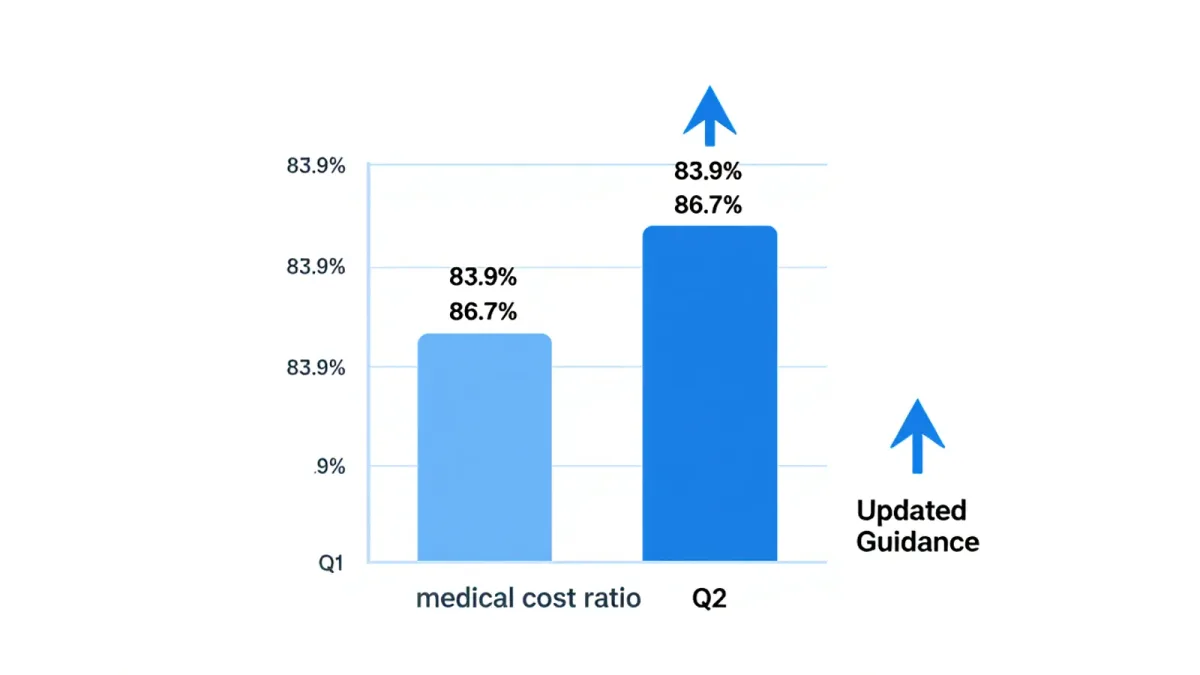
UnitedHealth Group reported second-quarter 2026 results on July 16, with a medical cost ratio of 86.7 percent and a raised full-year adjusted earnings forecast of $19.50 to $20.00 per share — the strongest signal yet that the cost surge that battered insurers through 2025 has crested, per Reuters' coverage of the report.
This is information, not financial or insurance advice. An insurer's recovery quarter does not change your premiums directly; filed rates and plan benefits do.
What did the second quarter show?
Per the company's July 16, 2026 release and Reuters' report, the medical cost ratio fell to 86.7 percent and the company lifted its 2026 adjusted EPS guidance to $19.50-$20.00. Combined with the first quarter's 83.9 percent ratio, the half-year data suggest the utilization spike of 2025 — specialty drugs, orthopedics, behavioral health — has settled into a slower, more predictable trend. Half-year arithmetic smooths those timing swings and is the better guide to how 2026 is actually landing.
Related stories: UnitedHealth Closes 2025 With $19.0 Billion in Operating Earnings and a 2.7 Percent Margin · UnitedHealth's Q1 2026 Cost Ratio Eased to 83.9 Percent.
Why the difference between the two quarters' ratios?
Quarterly ratios move with claims timing and business mix, not just underlying cost: Q2 includes seasonal utilization and different Medicare Advantage membership dynamics than Q1. The comparable signal is year over year — Reuters noted the improvement against 2025's elevated levels, when UnitedHealth's ratio problems forced benefit cuts and plan exits across the 2026 MA book.
What does an insurer's recovery buy consumers?
Breathing room, mostly. With margins rebuilding ahead of 2027 bids, insurers face less pressure to cut dental allowances, shrink networks, or exit counties again this fall. The counterpoint: some of the recovery comes from 2026's repricing, which members are already paying through higher premiums and out-of-pocket costs after the enhanced subsidy expiration.
What to watch next
October's 2027 plan releases are the consumer checkpoint. If UnitedHealth and its peers hold premiums steady and restore benefit extras in competitive counties, the recovery is real for members too. If plans keep trimming while margins rebuild, the 2027 annual notice of change will show it — read yours against at least one alternative before December 7, and recheck drug tiers line by line, since Part D formularies shift quietly year to year.
For more context, read UnitedHealth's Q1 2026 Cost Ratio Eased to 83.9 Percent.
For more context, read unitedhealth group 2025 results.
For more context, read 2027 medicare advantage rate announcement.