
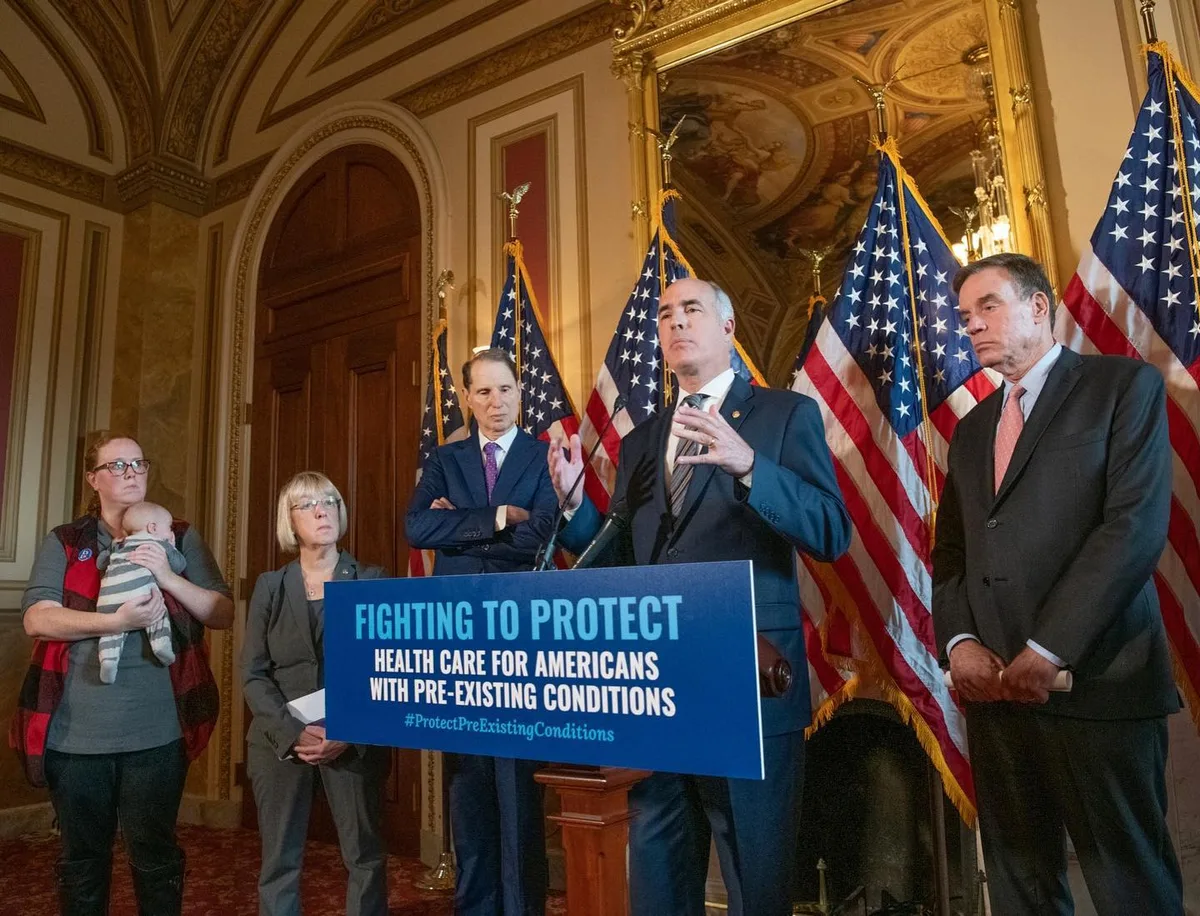
Coverage for pre-existing conditions is protected under federal law for most health plans sold today. Insurers cannot refuse to sell you a policy, charge you more, or exclude your illness from the contract because you had it before you enrolled. The protection does not reach every plan type, and it does not remove the need to sign up at the right time.
The money consequence is simple. Before the rule, a person with diabetes or a cancer history could be priced out of the market or sold a policy that paid nothing for the very condition they had. Today, once you are enrolled in a covered plan, your condition is covered on the same terms as anyone else's. What still varies is the network, the deductible, and the deadline — which is why our insurance coverage hub keeps enrollment and cost explainers side by side. We covered a connected angle in In-Network vs Out-of-Network: Why the Price Tag Changes and What You Owe.
Start with the word itself. Cambridge Dictionary defines insurance coverage as the extent of protection a policy affords — and that framing matters here, because a pre-existing condition rule is really a rule about what the policy's protection must include. A plan that covers "everything except your asthma" is not offering the same protection to you that it offers your neighbor.
What does the pre-existing condition rule actually protect?
The rule protects three things at once. First, access: an insurer cannot turn you down because of your health history. Second, price: it cannot set your premium based on your conditions, only on factors the rules allow, such as age, tobacco use, plan tier, and where you live. Third, scope: it cannot carve your condition out with an exclusion rider, a waiting period, or a claim denial that points backward to something you had before coverage started.
That third protection is the one people miss. The point is not just that you can buy the policy. It is that the policy must pay for care related to your condition once you are enrolled. A denial that says "this stems from a pre-existing condition" is, for covered plans, generally a denial you can challenge. Ask for the denial reason in writing, with the specific policy language the insurer relied on. That sentence is the spine of any appeal.
Which plans are not covered by the rule?
This is the qualification that changes outcomes. The strongest protections attach to major medical plans — job-based coverage, ACA marketplace plans, and most Medicaid and Medicare arrangements. Certain other products are not required to follow the same rules. Short-term limited-duration plans, some fixed-indemnity products, and a few other excepted-benefit arrangements can still screen for health history, charge based on it, or exclude it.
The practical risk shows up when someone buys one of these products believing it is comprehensive coverage. It may be cheap, and it may pay something, but it is not the same contract. Before you enroll in anything, read the section of the materials that describes what the plan is — the product type is usually stated plainly, because the distinction is legally significant. If the document calls the plan short-term or limited, treat the pre-existing condition protections as absent until proven otherwise.
Why does enrollment timing still matter?
The rule stops insurers from punishing you for your history. It does not let you enroll whenever you like. Marketplace plans and job-based plans operate on open enrollment windows, and outside those windows you generally need a qualifying life event — a job loss, a move, a marriage, a birth — to trigger a special enrollment period. Miss the window and you can be locked out until the next one, no matter how protected your condition would be once enrolled.
Timing also affects price in a different way. Marketplace subsidies depend on income and on which rules are in force that year, and those rules change. Our reporting on enhanced subsidies expiring and the drop in marketplace enrollment shows how a policy change can shrink the number of people enrolled even while the pre-existing condition rule itself stays on the books. The protection is stable. The affordability around it is not.
What should you do if a claim is denied for a pre-existing condition?
Work the appeal in order. The steps below are general procedure, not advice for your specific case, and your plan documents control the details.
- Get the denial code and the exact reason in writing. Do not accept a phone summary as the record.
- Request the specific contract language the insurer says supports the denial.
- Gather the evidence that answers it: enrollment dates, prior coverage records, and the treating provider's notes on when the condition was first diagnosed.
- File the internal appeal before the deadline stated in your denial letter. Deadlines here are short, and they are printed on the letter for a reason.
- If the internal appeal fails, ask about your right to an independent external review. That reviewer is outside the insurer.
Keep copies of everything, and keep a dated log of every call: who you spoke with, what they said, and what they promised to send. Appeals are won on paper trails more often than on passion.
What this means if your insurer is leaving the market
Insurer exits do not erase the protection, but they force a re-enrollment, and re-enrollment is where timing mistakes happen. When a carrier pulls out of a marketplace, members must pick a new plan during the special period created for the exit. The new plan must still accept you and cover your condition. What changes is the network, the drug list, and the cost sharing — so the comparison work matters more than the eligibility work. Our breakdown of what members should check when an insurer finishes its marketplace exit walks through that checklist. For related coverage, see Aetna Finished Its ACA Marketplace Exit: What Members Should Check Now.
The same logic applies to job-based coverage. If you change employers, your new plan must cover your condition. What you should watch is the gap between plans. A lapse in coverage can create problems for benefits that depend on continuous enrollment, so coordinate the end date of the old plan against the start date of the new one.
The bottom line on what's protected
The evidence here is durable rather than newsy: the core protection — no refusals, no condition-based pricing, no exclusions for covered major medical plans — has been the operating rule for years and shows no sign of quiet removal. What remains uncertain is the affordability layer around it. Subsidy rules, marketplace participation, and plan availability shift year to year, and those shifts change whether the protection is affordable in practice, not whether it exists.
So the working checklist is short. Confirm the plan is a major medical product, not a short-term substitute. Enroll inside the window or with a qualifying event. If a claim is denied on pre-existing grounds, demand the written reason and appeal it. And treat the pre-existing condition rule as a floor, not a ceiling — it guarantees you a seat at the table, but you still have to read the menu. This article is information, not medical or insurance advice.