
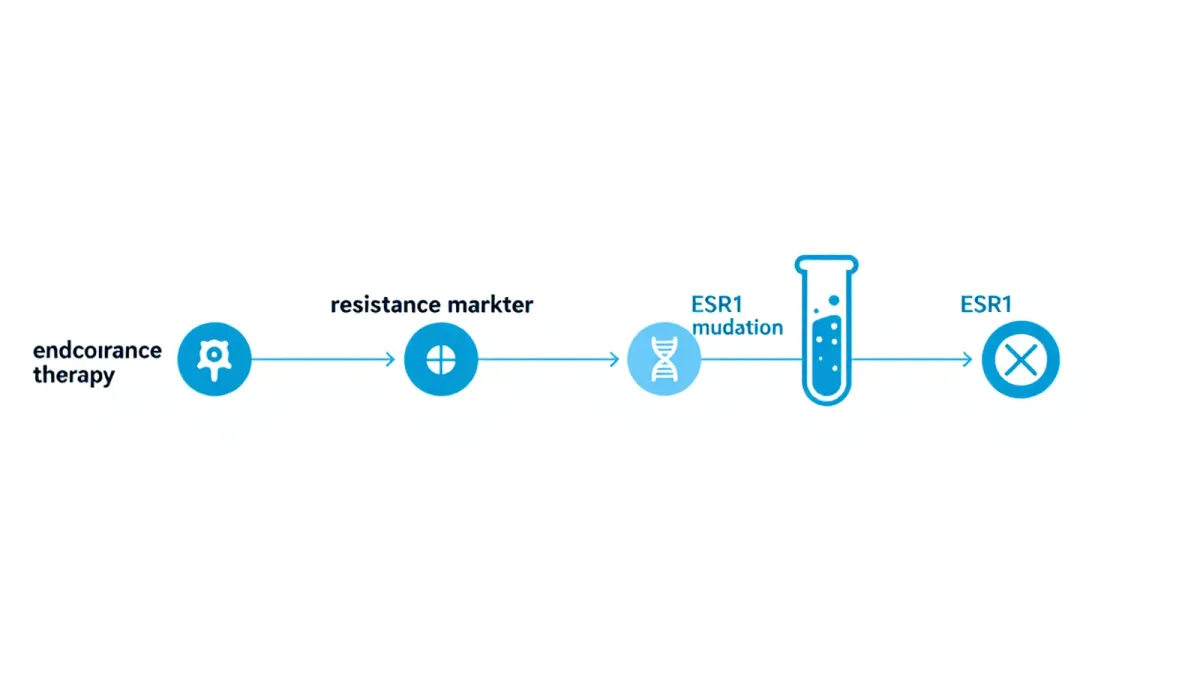
FDA approved Veppanu (epdegestrant) on May 1, 2026 for ESR1-mutated, HR-positive, HER2-negative advanced or metastatic breast cancer after endocrine therapy, per the agency's 2026 novel drug approvals list — an oral targeted therapy aimed at the resistance mutation that appears when first-line hormone treatment stops working.
This article publishes information, not medical advice. Oncology treatment decisions depend on molecular testing of your specific tumor; ask your oncologist whether your cancer carries an ESR1 mutation and what that means for sequencing options.
Why does the ESR1 mutation matter?
Hormone-receptor-positive breast cancer is driven by the estrogen receptor, and endocrine therapies — aromatase inhibitors, fulvestrant, oral SERMs and SERDs — work by starving or blocking that receptor. Under that pressure, tumors can acquire mutations in the ESR1 gene that make the receptor active without estrogen, a classic resistance mechanism that typically emerges after months to years of treatment. Roughly a third of patients treated with aromatase inhibitors develop detectable ESR1 mutations at progression, which is why molecular testing at relapse has become standard practice.
How does epdegestrant fit the treatment sequence?
Epdegestrant is an oral degrader of the estrogen receptor — a mechanism shared with the first-in-class SERD fulvestrant's oral successor elacestrant, approved in 2023 specifically for ESR1-mutated disease. Veppanu's approval adds a second oral option for this molecularly defined population, designed to be taken with a partner therapy (the label specifies endocrine therapy) rather than as a lone agent. For patients, second-line oral regimens mean fewer clinic infusion visits and, often, better tolerability than chemotherapy.
What should patients ask about?
Ask whether your tumor was tested for ESR1 by a validated assay at progression — the approval applies only to that mutation. Ask about the trial's progression-free survival figure, a time-based endpoint, not a cure claim. And ask your insurer about biomarker-based coverage: molecularly defined approvals usually require documentation of the mutation, so keep your genomic test report with your records.
What to watch next
Watch whether overall survival data mature in the label over time, and how payers sequence Veppanu against elacestrant and CDK4/6 inhibitor combinations. Genomic testing access — who gets a biopsy or liquid biopsy at relapse — is the quieter equity issue this approval puts back in focus.