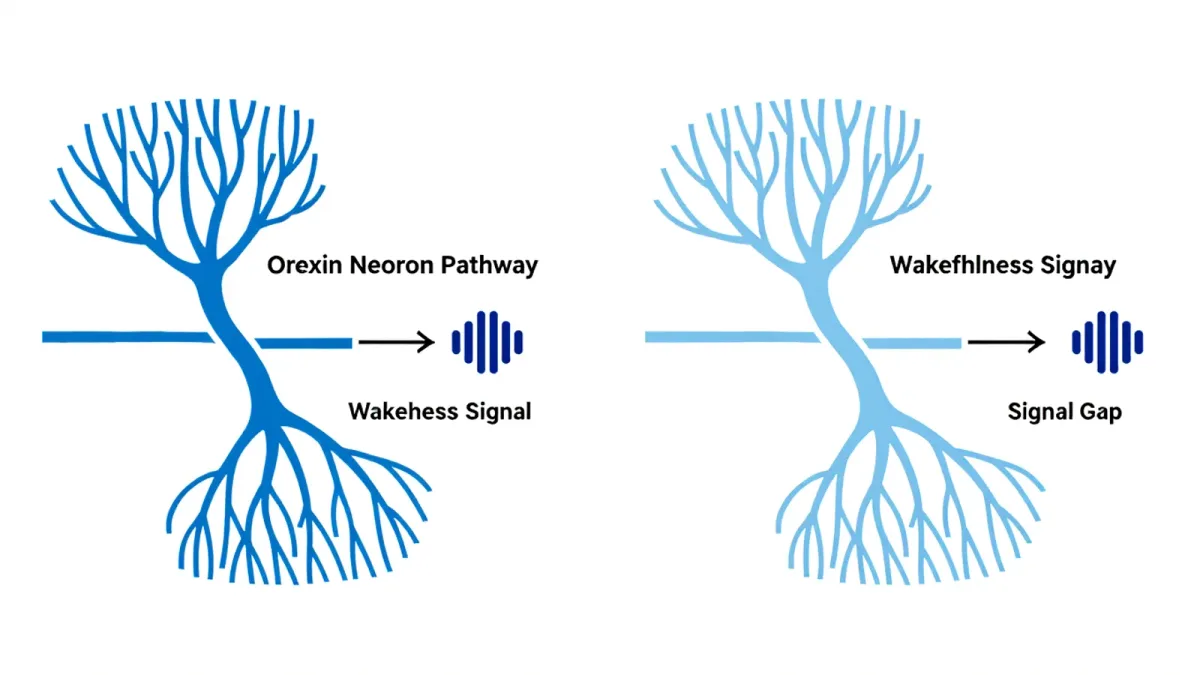
FDA approved Orzeyful (oveporexton) on August 5, 2026 for excessive daytime sleepiness in narcolepsy type 1, per the agency's 2026 novel drug approvals list — an oral orexin receptor agonist that replaces the missing wakefulness neuropeptide rather than masking sleepiness with stimulants.
This article publishes information, not medical advice. Narcolepsy is diagnosed and managed by sleep specialists; any new therapy conversation should start with your sleep medicine clinician and, where relevant, your ability to keep driving safely in the interim.
What makes this mechanism different?
Narcolepsy type 1 is defined by the loss of orexin (hypocretin) neurons in the hypothalamus — the brain's wake-stabilizing signal. Standard therapy has been symptomatic: stimulants and sodium oxybate push wakefulness from the outside, while antidepressants suppress cataplexy. Orexin receptor agonists restore the missing signal directly. TAK-861, the investigational name under which oveporexton was developed, advanced through phase 3 after phase 2b results showed reductions in excessive daytime sleepiness and cataplexy episodes, making it the most advanced of a new class that could eventually extend to idiopathic hypersomnia.
Why does this matter beyond narcolepsy?
Narcolepsy type 1 affects roughly 1 in 2,000 people, most undiagnosed for years — the average patient waits close to a decade between first symptoms and diagnosis. But the orexin system is also a central target for insomnia, worked from the opposite direction by dual orexin receptor antagonists such as lemborexant and daridorexant. A receptor agonist for wakefulness and antagonists for sleep bracket the same circuitry, and every approval on either side sharpens the field's map of it.
What should patients do now?
Ask your sleep specialist whether oveporexton fits your symptom profile — the approval covers narcolepsy type 1, with cataplexy, not type 2 or other hypersomnolence disorders. Ask about titration, adverse effects in the label, and prior authorization: rare-disease specialty drugs typically require documented diagnosis and failed first-line therapy before a plan covers them.
What to watch next
Watch long-term safety data as real-world use accumulates and whether the sponsor files for additional hypersomnolence indications. For undiagnosed patients, the practical step is unchanged and urgent: if you have overwhelming daytime sleepiness with muscle weakness triggered by emotion, ask for a referral to a sleep center and an MSLT.