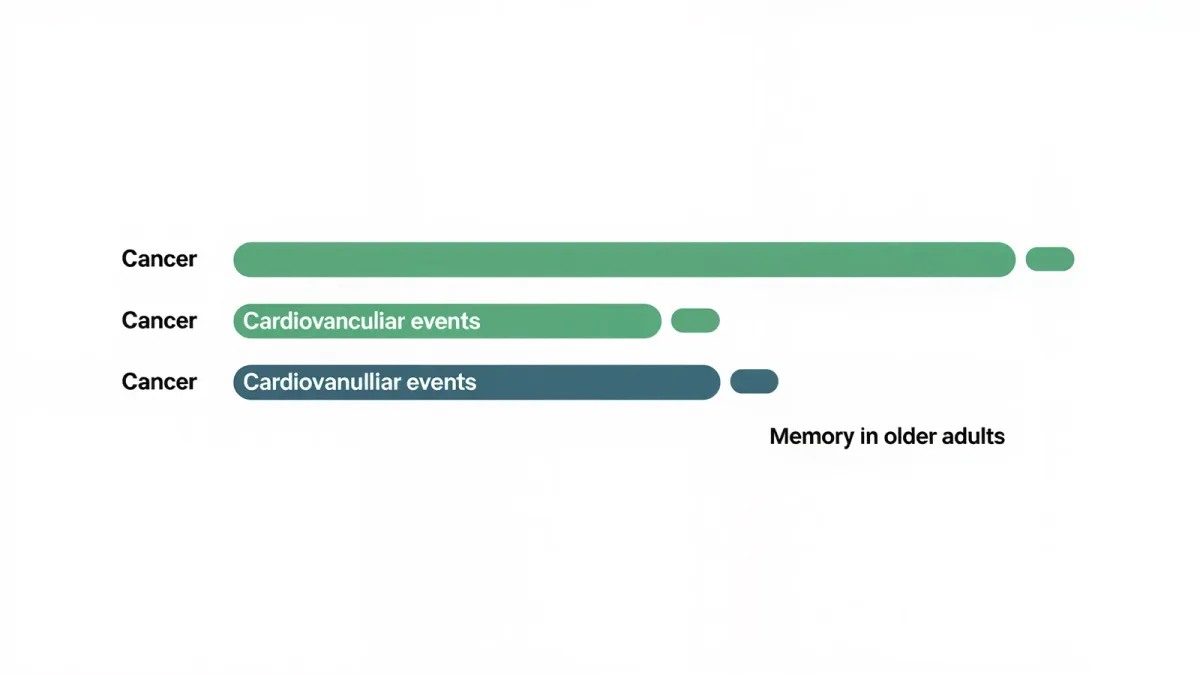

Nearly one in three American adults takes a multivitamin-mineral supplement, making it the single most popular supplement category in the country, per National Health and Nutrition Examination Survey analyses. The return on that habit, measured by trials, is small and specific: multivitamins have not been shown to prevent cardiovascular disease, cancer or premature death in the general adult population, though they may slow cognitive decline in older adults and fill genuine nutrient gaps in defined groups. That gap between popularity and proof is worth unpacking before the next bottle is bought.
People who are pregnant, managing malabsorption conditions, or on restricted diets have different needs and should plan supplementation with a clinician.
What did the USPSTF conclude?
The US Preventive Services Task Force, the standard-setting body for preventive care in the US, issued its current recommendation in June 2022 after reviewing 84 studies. Its conclusion: current evidence is insufficient to assess the balance of benefits and harms of multivitamin supplementation for preventing cardiovascular disease and cancer in healthy, non-pregnant adults. In the same statement the task force went one step further on beta-carotene, recommending against its use for that purpose because two large trials linked it to increased lung cancer risk among smokers, and it found no benefit of vitamin E for prevention. An updated review released in 2025 maintained the insufficiency finding, so the federal position has now been stable for several years.
What do the large trials show?
The Physicians' Health Study II, the largest long-term randomized trial of a common multivitamin, followed 14,641 male physicians for about 11 years. Total cancers fell by a modest 8 percent, driven mainly by a reduction in prostate cancer, while cardiovascular events and mortality were unchanged. The COSMOS trial in more than 21,000 older adults reported no significant reduction in major cardiovascular events overall, and subgroup signals suggesting benefit in women have not translated into a general recommendation. On cognition, COSMOS-Mind, reported in 2022 in about 2,262 older adults, found daily multivitamin use improved memory scores versus placebo — a preliminary but notable finding being followed up in larger COSMOS analyses.
Who plausibly benefits?
Between the null population results and individual physiology sit groups where a multivitamin is a reasonable proxy for a diet that cannot be fixed:
- Adults over 50 with limited appetite or intake, among whom vitamin B12 absorption from food declines as stomach acid falls.
- People on very low-calorie or exclusion diets, including strict vegans without a B12 source.
- Women who may become pregnant, who need 400 mcg of folic acid daily from supplements or fortified foods to prevent neural tube defects — a recommendation with strong trial support and CDC endorsement.
- Patients with malabsorption — bariatric surgery, celiac disease, inflammatory bowel disease — where clinicians routinely prescribe specific regimens.
For everyone else, the argument is insurance against dietary imperfection. That logic is defensible; the issue is that trial results do not convert it into disease prevention.
Does the form or the price matter?
Multivitamin pricing spans roughly a 40-fold range, and trials have generally tested inexpensive, basic formulations. No published head-to-head evidence shows premium blends — added botanicals, enzymes or "superfood" concentrates — improve on the simple products. Two formulation notes have practical value: choose doses near 100 percent of the Daily Value rather than multiples, since exceeding the tolerable upper limit for nutrients like vitamin A, zinc and niacin is where multivitamin harms appear; and split products help people whose iron or calcium interferes with thyroid or antibiotic medications. A third-party verification seal (USP or NSF) matters more here than in any other category, because a multivitamin assay tests a dozen ingredients at once.
What are the actual risks?
For most adults a standard daily multivitamin is low-risk. The documented harms cluster around dose and overlap: stacked products (a multivitamin plus a B-complex plus an energy drink) can push niacin toward flushing and liver strain, zinc toward copper deficiency, and fat-soluble vitamins toward accumulation. In smokers and former smokers, high-dose beta-carotene is the established exception — the ARETA and CARET trials found increased lung cancer incidence, which is why the USPSTF recommends against it outright.
Does the insurance side of this matter?
For most readers a multivitamin is an out-of-pocket expense of a few dollars a month, but coverage questions do arise. Under the Affordable Care Act, USPSTF A and B recommendations must be covered without cost-sharing by most private plans, and folic acid supplementation for women capable of pregnancy is one of the covered preventive services — which is why prenatal vitamins with folic acid are routinely covered, while generic wellness multivitamins generally are not. Medicare Part D plans maintain formularies where prescribed supplements for specific conditions, such as calcium and vitamin D after transplant or for osteoporosis management, may appear, though a routine daily multivitamin typically is not included. The practical takeaway: a prescription written for a specific deficiency gets a coverage pathway, a wellness purchase does not. When a clinician tells you to take a supplement, ask whether a prescription version would be covered before paying retail.
That cost arithmetic compounds over time. A $15-per-month premium multivitamin runs $180 a year, roughly the cost of a gym co-pay year or a produce-heavy grocery adjustment with measured benefits behind it. Neither is wrong; only one has trials.
What should a reader do differently?
Spend the multivitamin budget where trials point: food first, a basic one-a-day at sane doses if your diet is inconsistent, folic acid 400 mcg if pregnancy is possible, and B12 if you are older or vegan. Treat disease-prevention claims on the box as unsupported — the task force has already graded them insufficient. Watch the space: extended COSMOS cognitive results and ongoing trials in older adults are the most likely places the evidence will move next.