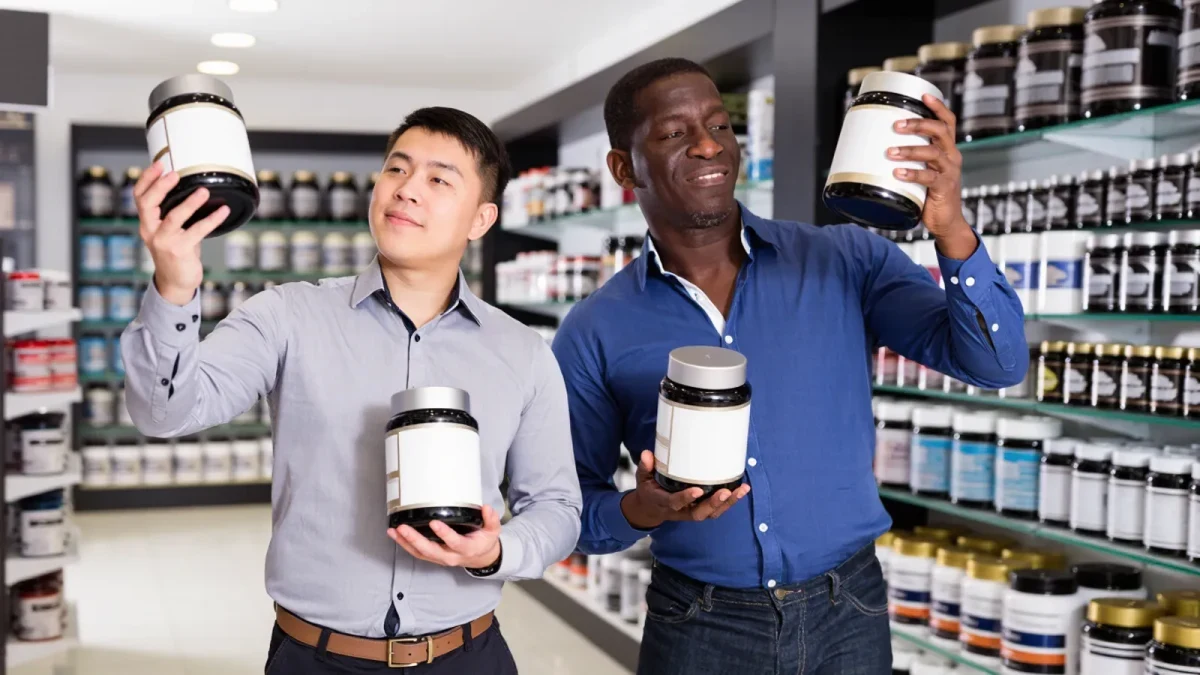
Nearly one in four Americans taking prescription drugs also reports taking a dietary supplement, per national survey analyses, and most never mention the supplements to a doctor or pharmacist. That silent combination is where supplement risk concentrates. Serious interactions are uncommon relative to the millions of people who take both, but the ones that occur are well documented, predictable from pharmacology, and almost always preventable with one conversation or one timing change.
If you take anticoagulants, immunosuppressants, HIV medications, chemotherapy or seizure drugs, do not add or stop any supplement without talking to the prescriber — the interactions below are strongest exactly in those categories.
Which supplement causes the most trouble?
St. John's wort, an herbal product some people take for mood, is the pharmacology textbook case. It activates CYP3A4, the liver enzyme system that metabolizes roughly half of all prescription drugs, and increases P-glycoprotein efflux. The consequences are documented in clinical reports: organ rejection in transplant patients on cyclosporine, reduced effectiveness of oral contraceptives, treatment failure with HIV protease inhibitors, warfarin dose failures, and reduced levels of some chemotherapy agents. A supplement that weakens a lifesaving drug is more dangerous than one that simply does nothing, which is why pharmacists flag this one ingredient above most others, per NIH's National Center for Complementary and Integrative Health summaries.
The blood-thinner cluster
Warfarin is the highest-stakes example because its dose is calibrated by INR blood tests. Vitamin K — in supplements and in large amounts of leafy greens — directly opposes warfarin and destabilizes the calibration. Meanwhile several herbal products push the other direction toward bleeding: ginkgo, garlic supplements, ginger in high doses, fish oil above about 3 grams daily, and dong quai all show antiplatelet or anticoagulant effects in varying evidence. Case series report intracranial hemorrhage from ginkgo-warfarin combinations. The newer direct oral anticoagulants (apixaban, rivaroxaban) interact less dramatically but are not exempt — St. John's wort lowers their levels too.
Absorption interference
The simplest interactions are mechanical. Calcium, iron and magnesium bind to fluoroquinolone antibiotics (ciprofloxacin, levofloxacin) and tetracyclines (doxycycline) in the gut, forming insoluble complexes; a thyroid patient's levothyroxine is similarly blocked by calcium and iron taken within about four hours. Bisphosphonates like alendronate carry the same warning. None of this requires stopping the supplement — it requires separating doses, typically by two to four hours, per FDA labeling guidance for the affected drugs.
Serotonin and stimulant stacking
Supplements with serotonergic activity — St. John's wort, 5-HTP, high-dose SAMe — add risk when combined with SSRIs, SNRIs or triptans, with published case reports of serotonin syndrome: agitation, rapid heart rate, elevated temperature, tremor. At the stimulant end, bitter orange (synephrine) stacks sympathetically with some asthma and decongestant drugs, and caffeine-laced "energy" supplements interact with stimulant prescriptions. Post-market FDA analyses repeatedly find still another layer: actual pharmaceuticals hidden in weight-loss and sexual-enhancement products, meaning some interactions happen with drugs the user never knew they were taking.
How interactions are actually predicted
Pharmacists run interaction checks from the same mechanism families: enzyme induction or inhibition, absorption binding, additive pharmacologic effect, and additive toxicity (for example, anything nephrotoxic stacking on kidney strain). The practical leverage point is the medication list. Bring every supplement bottle to a pharmacy counter once a year — the check takes minutes — and ask specifically about timing. Reliable resources include MedlinePlus, which publishes consumer monographs for most herbal ingredients with interaction sections drawn from the literature.
Who checks at the hospital?
Hospital admission is the highest-risk moment because medication reconciliation is rushed. Nurses record home medications, but supplements are the category most often omitted — patients forget them, assume they are irrelevant, or feel embarrassed to name them. Yet perioperative practice shows why they matter: anesthesiology guidelines recommend stopping bleeding-risk herbs one to two weeks before surgery, and case reports describe cardiac instability when patients on chronic licorice or ephedra-containing products undergo anesthesia. If you are admitted, correct the record: say the words herbal supplement explicitly, and bring bottles or a photographed list. The same applies before chemotherapy cycles, where oxidative-stress supplements and antioxidant megadoses are actively studied but not cleared for routine use alongside regimens.
Timing also runs in reverse: some drugs deplete nutrients, which is a supplement-relevant side effect. Metformin is associated with lower vitamin B12 levels over years, per FDA labeling; proton pump inhibitors reduce B12 and magnesium absorption with long-term use; and loop diuretics waste potassium and magnesium. These are reasons to test, not to reflexively supplement — but they belong on the same list at the same conversation.
Five rules that prevent most problems
- Make every prescriber see the full list, including herbal products, protein powders and high-dose vitamins.
- Separate mineral supplements from the antibiotics and thyroid drugs they block — ask your pharmacist for exact hour gaps.
- Treat St. John's wort as incompatible with transplant drugs, HIV regimens, contraceptives and warfarin unless a specialist says otherwise.
- Flag vitamin K consistency if you are on warfarin: the goal is stable intake, not avoidance.
- Stop any supplement for a defined period before surgery as directed — bleeding-risk herbs and anesthetic interactions are the reason anesthesiologists ask.
What to watch
The knowledge base keeps improving: NIH-backed interaction databases are being expanded, and as pharmacogenomic testing spreads, clinicians increasingly can predict which patients metabolize drugs through the very enzyme systems supplements induce. The durable habit is disclosure. The interaction risk is not the supplement or the drug — it is the gap between the two lists.