
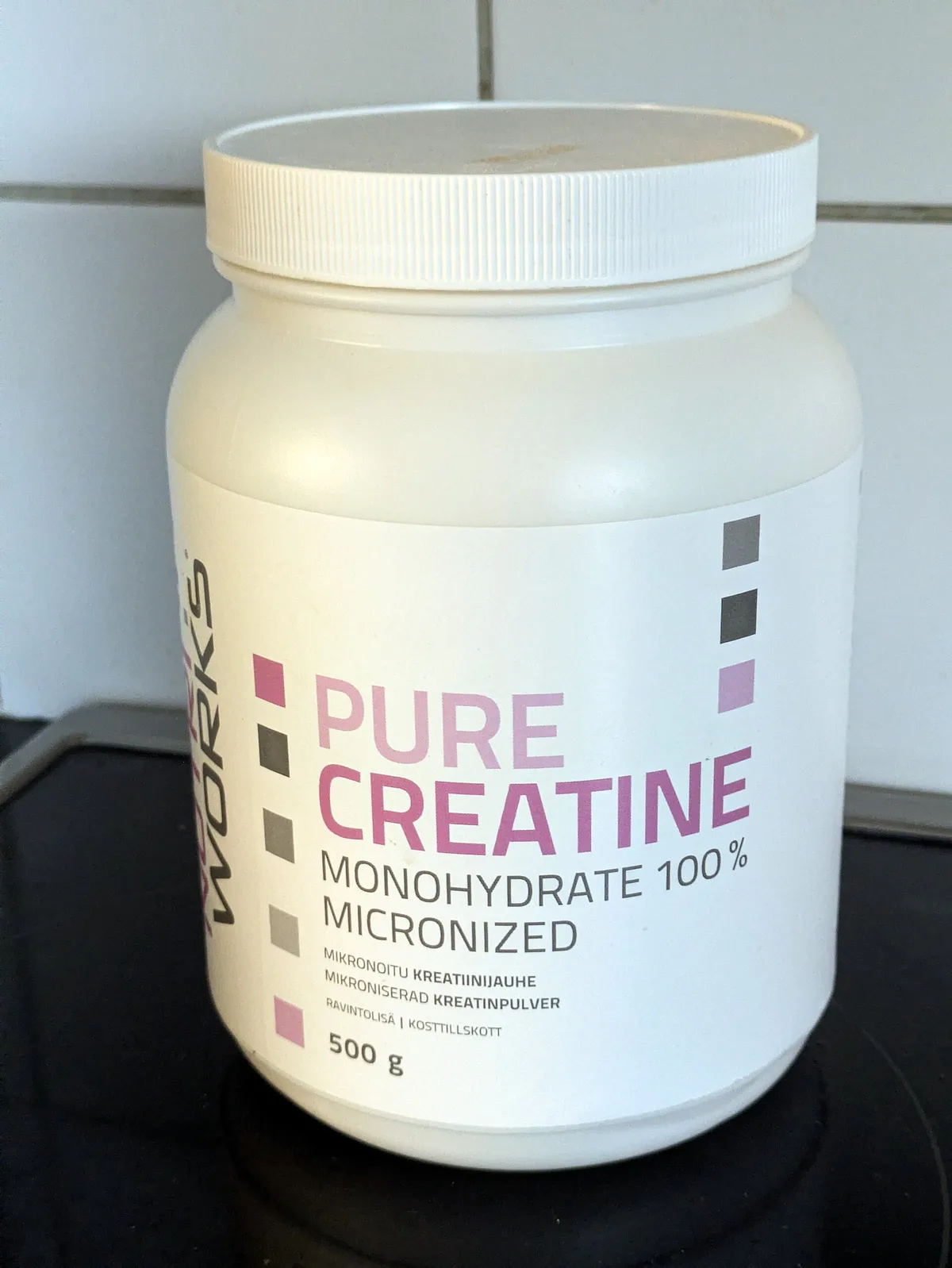
Creatine is not just for bodybuilders. According to Men's Fitness, the supplement long filed under muscle-building may also support training performance, recovery and even cognitive function — and a fitness journalist who trains six days a week admits he avoided it for years because he assumed it would leave him bloated. That fear, it turns out, mostly rests on a misunderstanding.
The core mechanism is simple. Creatine is already in your body, and you also get it from meat, poultry and fish. Most of it sits in your muscles, where it helps replenish ATP, the molecule that carries and releases energy in your cells. When you hit a heavy set or a sprint, you burn through ATP fast — and a supplement helps keep those levels up, which is why you can often squeeze out more reps. This connects to our earlier piece, Magnesium Supplements: Which Form Does What, and What the Evidence Supports.
If you are weighing whether creatine belongs in your routine, the honest answer from the current reporting is: it depends what you want. For short, hard efforts in the gym, the case is solid. For recovery and brain health, the research is more tentative — interesting, but not settled. Here is what the evidence actually covers, and what one longtime skeptic found when he finally tried it.
Does creatine cause bloating and water weight?
This is the most common worry, and the answer is more nuanced than the locker-room version. "Creatine draws water into your muscle cells, which is actually part of how it works," performance nutritionist Dan Richardson told Men's Fitness. Some people see a small jump on the scales in the first few weeks, but that is water inside the muscle, not body fat.
Richardson draws a clear line between the two things people conflate: water stored in muscle and digestive bloating are not the same. An early weight increase can reflect water retention, particularly if you take a higher loading dose. So the scales might move without meaning you have gained fat — useful to know before deciding your new supplement has undone your hard work.
Can it help with recovery?
Creatine's main recovery benefit, per Richardson, is helping you keep training quality high across repeated hard sessions — which is what actually drives progress over time. Some research suggests creatine may support glycogen replenishment when taken alongside carbohydrates, and may reduce certain markers of muscle damage after demanding exercise.
But the findings vary between studies, and not everyone will feel less sore. Richardson's advice pairs the supplement with the basics: good sleep, enough food and plenty of protein. That is the recovery setup that works, with or without creatine.
What about brain benefits?
This is the part that surprised the Men's Fitness writer most. "Your brain is only about 2% of your body weight but uses roughly 20% of its energy, and it runs on the same ATP system as your muscles," Richardson explained — which is why researchers have taken an interest in creatine and cognition.
A 2024 study found that a single high dose improved some measures of cognitive performance during sleep deprivation, helping people maintain sharpness after a restless night. The article also cites research exploring creatine's potential role in neurological conditions including Parkinson's, dementia and Huntington's disease. Treat this as early-stage interest, not a proven benefit: the sleep-deprivation finding covers one specific condition, and the neurological research is exploratory.
Do you need to time it perfectly?
No — and this is the easiest habit to keep. "Timing is far less important than consistency," Richardson says. Creatine works by gradually building up in your muscles, so taking it every day matters much more than the exact time, rest days included. Before or after training both work; have it with a meal, in a post-workout shake, or whenever you will actually remember.
For most adults, 3–5g of creatine monohydrate daily is a fairly standard approach. You do not need a loading phase: a smaller daily dose builds muscle stores gradually, taking around four weeks to fully saturate them. Note also that you would need to eat a significant amount of meat or fish to match a daily supplement dose — which explains the supplement's popularity over food alone.
So is creatine worth trying in your 40s?
The Men's Fitness writer spent years putting creatine in the bodybuilding box without questioning whether that was fair. Looking into the evidence changed his mind: the performance case is the strongest, the recovery case is moderate and study-dependent, and the cognitive case is promising but early. The practical starting point is small — 3–5g a day, taken whenever you remember, for at least four weeks before judging how you feel.
If you do start, one habit makes the difference: attach the dose to something you already do daily. Breakfast, coffee, brushing your teeth — the anchor matters more than the clock. And if you want to compare creatine against the rest of the shelf, our guide to Supplements That Actually Work, According to Science puts the evidence grades side by side, and our Supplement Facts label walkthrough helps you check what a tub actually contains before you buy.